
In 2017, I walked into a pitch competition at Lake Forest College with an idea I couldn’t stop thinking about.
It was simple on the surface: help small and mid-sized businesses make the transition into the digital age.
I pitched it under the name Small Business Social.
And I lost.
Not just “didn’t place” lost. At the time, it was humbling.
In hindsight, it was exactly what I needed because it forced me to stop thinking of Small Business Social as an “idea” and start thinking of it as a craft. Something you earn through reps, proof, and results.
I didn’t realize it then, but within months I’d be handed the kind of real-world case study you can’t fake.

The moment it became real: My Chef Catering
Later in 2017, my parents along with two longtime employees bought into My Chef Catering, one of the largest catering and events providers in the Chicagoland area.
My dad had been a longtime sales leader there, so when you search my name on LinkedIn, you may find him too. This is common in Italian culture: a father passes his name to his son; funnily enough, I am the third Dominick in a line of many.
The company had earned meaningful recognition over the years, including “Small Business of the Year” wins from the Naperville Chamber of Commerce and the U.S. Chamber.
But while the business was a strong operationally and relationally, one thing had quietly started slipping:
Marketing had fallen behind.
Not because no one cared, but because when a business is busy and growing, the urgent always beats the important. Since the late 2000s, the digital side of the business hadn’t kept pace with how customers were changing.
The reputation was excellent.
The product was strong.
The service delivered.
But online?
The presence didn’t reflect the reality of a modern wedding and events business.
That’s when I got the call: “Can you help us set this business up for digital marketing success?”
And that question, more than the pitch competition, became the true start of what Small Business Social was always supposed to be.
Turning “word-of-mouth strong” into “digital strong.”
Here’s what I learned quickly: a lot of small businesses are already winning—they’re just not capturing the value of that winning online.
My Chef didn’t need a brand invented from scratch.
It needed the digital infrastructure to translate real-world excellence into visible digital proof.
Over the years that followed, we made practical investments:
1) Establish the foundations
Launched and maintained core social media pages
Built a more intentional content engine
Improved paid ads to support a predictable lead flow
Eventually, launched a new website that matched the quality of the business
2) Build a review-and-reputation system that sales could run
Behind the scenes, I built a reputation management workflow with the sales team, something sustainable that didn’t rely on a single person “remembering” to ask for reviews.
That system helped us consistently win and maintain recognition across the wedding ecosystem, including:
Best of Zola
Best of Weddings (The Knot)
WeddingWire awards
And it wasn’t just about trophies.
In weddings and events, especially, reviews are not “nice to have.” They are a conversion asset leveraged by the sales team. If there’s one industry where you can’t fake it till you make it, it’s weddings and events. Reviewers will eat you alive if your product isn’t up to snuff.
3) Use email + PR to create compounding attention
We leaned into:
A real email marketing database (not a “send it when we remember” list)
Local PR in Naperville Magazine, Chicago Magazine, and the Daily Herald
Community visibility that matched the quality of the operation
Those efforts helped support wins like Best of Naperville (Naperville Magazine readers’ choice) 10+ years going now, and—more importantly—kept creating top-of-funnel momentum that turned into booked business.
The results weren’t theoretical. These systems produced hundreds of thousands of dollars in web-to-wedding bookings over time. Resulting in the company hitting new growth points in the years following the pandemic.
Not from one viral post.
Not from one “growth hack.”
From compounding basics done well over the long term.

The COVID pivot: keeping holiday revenue alive
Then the world changed.
When COVID hit, and operations shifted, we had to protect revenue while customer behavior was in flux. One of the most practical moves we made was introducing online ordering using Tock To Go.
That mattered because it wasn’t marketing for marketing’s sake; it was a direct, revenue-generating solution that helped maintain holiday sales amid constantly changing business operations.
That chapter reinforced something I now consider a non-negotiable belief:
Digital is not a department. It’s business continuity.

Earned Media in the Daily Herald about Illinois Reopening in 2021
Reopening, new reality: shifting from paid ads to short-form organic
As events returned and the wedding market normalized, another shift became obvious:
In this category, brides were increasingly being captured on social media first, and short-form video was becoming the dominant format on social platforms.
So we evolved again.
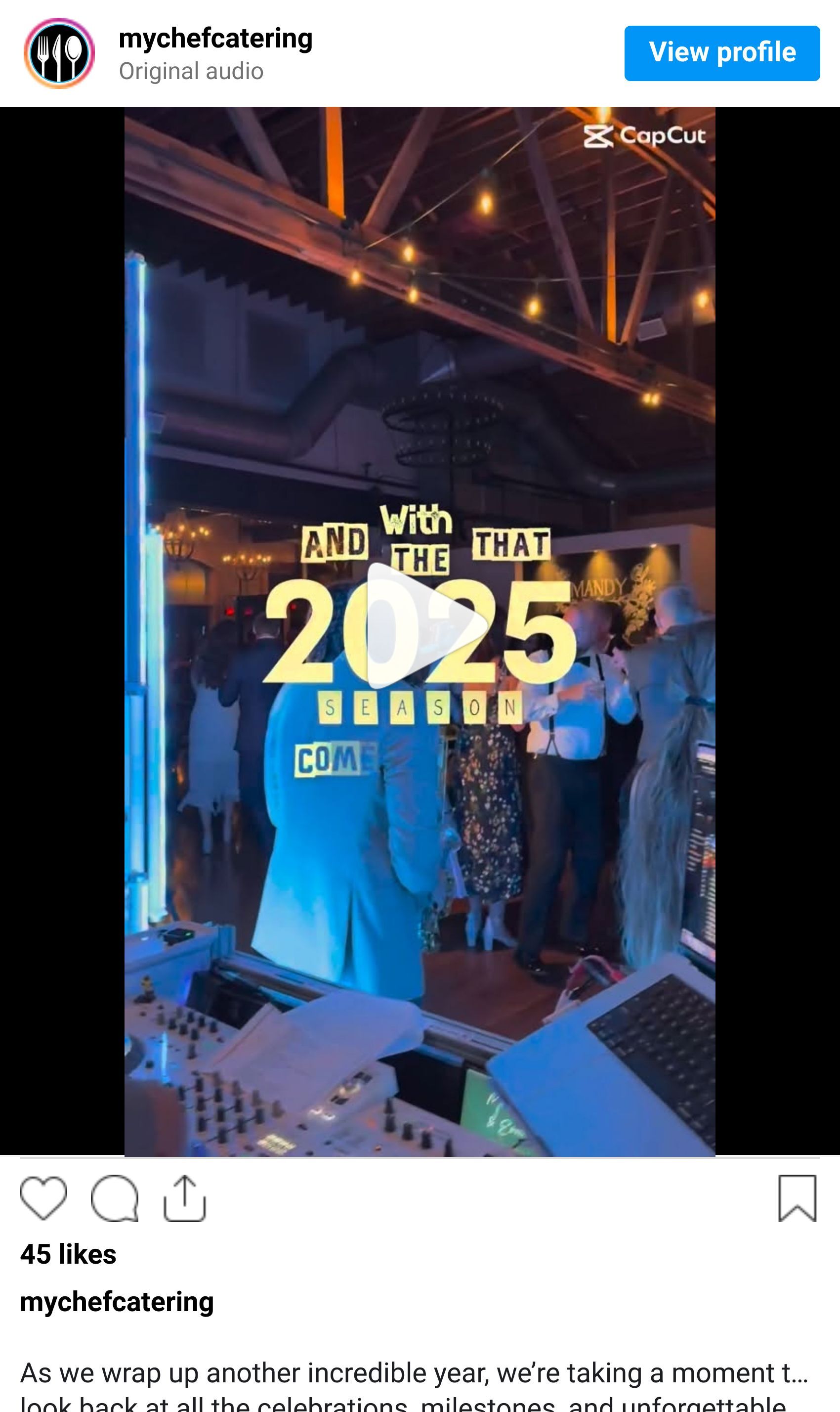
Working with an on-site content creator, we shifted strategy away from relying primarily on paid ads and into an organic, short-form, video-first approach aimed at staying current with social trends in a way that actually fits how modern couples discover vendors.
Where Small Business Social fits into all of this

Here’s the part I want to say plainly:
Small Business Social has been operating in the background of my career for years.
It’s been the umbrella over how I think about:
building systems instead of one-off campaigns
making marketing designed to hit real business outcomes
treating “local” as an advantage, not a limitation
That mindset also gave me the confidence to take on side projects and clients, including ongoing support for Breneman Capital a multifamily real estate investment firm across content creation, website, blog work, and newsletter efforts. Something I’ll unpack in a future standalone mailer because there’s a lot of value in what we built there.
I’ve also spent time in B2B SaaS marketing. Even while working for companies like Axcient and NinjaOne, my focus kept narrowing toward a specific type of business: MSPs—managed service providers.
If you’re not familiar: MSPs are the smaller tech providers who resell, implement, and manage IT services for other businesses. They’re a quiet force multiplier for small businesses in every sector, and I know that world intimately.
The purpose of the “new” Small Business Social
This relaunch is a purposeful retargeting.
Small Business Social is no longer a pitch-deck concept or a “maybe someday” side hustle.
It’s transforming into:
an educational newsletter
a place for conversation and community
a long-term personal brand asset that I intend to build for years
This is not a classic agency.
This is not a generic marketing newsletter.
This is not content for content’s sake.
Each issue will be built like a mini case study: from my work, my clients, and the network I’ve been lucky to build. Highlighting key things like:
what we did
why it worked (or didn’t)
the tools used
the relationships/networks that made it possible
what I’d repeat, and what I’d avoid
And because I’ve spent years in and around Chicagoland from the western suburbs to the North Shore I’ll use this platform to surface local events and developments worth paying attention to (and worth supporting).
Tools and networks you’ll see referenced
A quick snapshot of the kinds of tools and leverage points that will show up repeatedly in these case studies:
Email marketing systems (list growth, segmentation, automation, offers)
Reputation management workflows (review generation + process with sales/service teams)
Paid media (when it’s useful, when it’s waste, and how to pressure-test it)
Web + conversion infrastructure (site updates, landing pages, tracking, booking pathways)
Online ordering / revenue tools (like Tock To Go when it fits the model)
Local PR + chambers + community ecosystems (visibility that money can’t always buy - you have to earn it)
Social content systems (especially short-form video and a repeatable production cadence)
What you can expect from this newsletter
Chicagoland area small business events and developments
Local events, openings, partnerships, community initiatives, and operator-relevant updates curated for people who actually run small businesses.Digital marketing tips for small businesses
Practical guidance on email, social, and outbound email, plus commentary on websites, podcasts, and other new media forms. AI will always be part of the conversation, but anchored in real use cases. No million dollar prompt promises here.Owner stories as the community grows
As this grows, I plan to launch a regular show where I can share stories of small business owners, their successes, lessons learned, and how they navigate challenges in real time.
Thanks for being here for my reset,
Dom Scafidi
Small Business Social